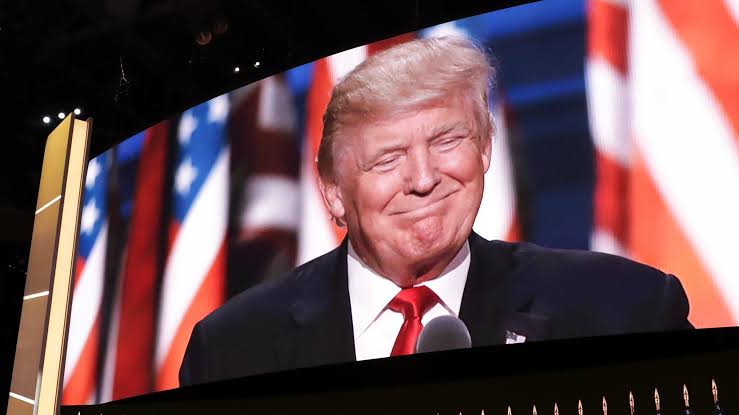
US President Donald Trump has announced that his administration will refer to artificial intelligence as “superintelligence” in official US government documents, as world leaders at the United Nations debated the opportunities and risks posed by rapidly advancing AI technology.
Trump made the announcement on Tuesday while addressing the 81st United Nations General Assembly in New York.
He argued that the word “artificial” makes the technology sound less real, saying the United States would henceforth use the term “superintelligence” in its official documents.
Trump also rejected international efforts to establish what he described as a global system for controlling AI, saying the United States would continue to encourage the development of the technology.
However, he said the US would monitor the sector and could use law-enforcement authorities, including the Department of Justice, to intervene where necessary. Reuters reported that Trump said US law-enforcement agencies would rein in the sector if required.
Leaders call for stronger safeguards
Trump’s position contrasted with calls from several other governments for stronger international safeguards around advanced AI.
Channels Television reported that leaders from more than 20 mainly European countries had backed calls for binding safety measures for advanced AI, warning that technological development could move faster than governments’ ability to control associated risks.
French President Emmanuel Macron called for greater technological independence and argued that countries should avoid becoming dependent on either the United States or China for critical AI capabilities.
He proposed pooling investment to develop an open-source AI model that could be shared internationally.
UN Secretary-General António Guterres also called for dialogue between the United States and China over the future of AI.
Guterres compared the need for communication between the two leading AI powers to the channels established between strategic rivals during the Cold War to manage shared risks.
AI safety becomes major UN issue
Artificial intelligence has emerged as a significant issue at this year’s General Assembly as governments, technology companies and international organisations debate how to manage increasingly powerful AI systems.
The discussions have focused on issues including safety, human oversight, misinformation, autonomous systems and the potential impact of advanced AI on international security.
The Associated Press reported that world leaders have presented sharply different visions for AI at the UN, ranging from its potential economic and technological benefits to concerns about systems becoming difficult for humans to control.
Technology executives are also expected to participate in discussions at the UN Security Council. OpenAI chief executive Sam Altman is scheduled to address the council, while Anthropic CEO Dario Amodei and Hugging Face co-founder Clement Delangue are expected to participate remotely.
The debate highlights a growing divide over how AI should be governed. While the United States under Trump is opposing broad international regulation, several other governments are pushing for common safety standards and greater international coordination.
As AI capabilities continue to advance, governments are increasingly facing the challenge of balancing technological development with safeguards against potential risks.