Nigeria’s Federal Government spent ₦7.7 trillion on debt interest payments in the first half of 2026, exceeding its total revenue of ₦6.2 trillion by ₦1.5 trillion, according to the World Bank.
The figures were contained in the World Bank’s October 2026 Nigeria Development Update, titled “Beyond the Federal Purse: How Higher Revenues Shaped State Priorities,” obtained by The PUNCH.
The report showed that debt interest payments increased by 37.5 per cent, rising from ₦5.6 trillion in the first half of 2025 to ₦7.7 trillion during the corresponding period in 2026. The increase was largely attributed to high domestic borrowing costs.
Meanwhile, federal revenue rose by 72.2 per cent, from ₦3.6 trillion to ₦6.2 trillion, supported by improved oil receipts, stronger corporate tax collections and higher independent revenues.
Despite the revenue growth, government expenditure increased by 10.3 per cent, climbing from ₦14.6 trillion to ₦16.1 trillion during the period.
Capital expenditure reportedly declined sharply to ₦700 billion, equivalent to 0.3 per cent of Gross Domestic Product (GDP). The report indicated that the Federal Government spent approximately 11 times more on debt interest payments than on reported capital projects.
The World Bank also noted that combined interest and personnel costs reached ₦11.9 trillion, accounting for about 73.9 per cent of total federal expenditure and nearly twice the government’s revenue.
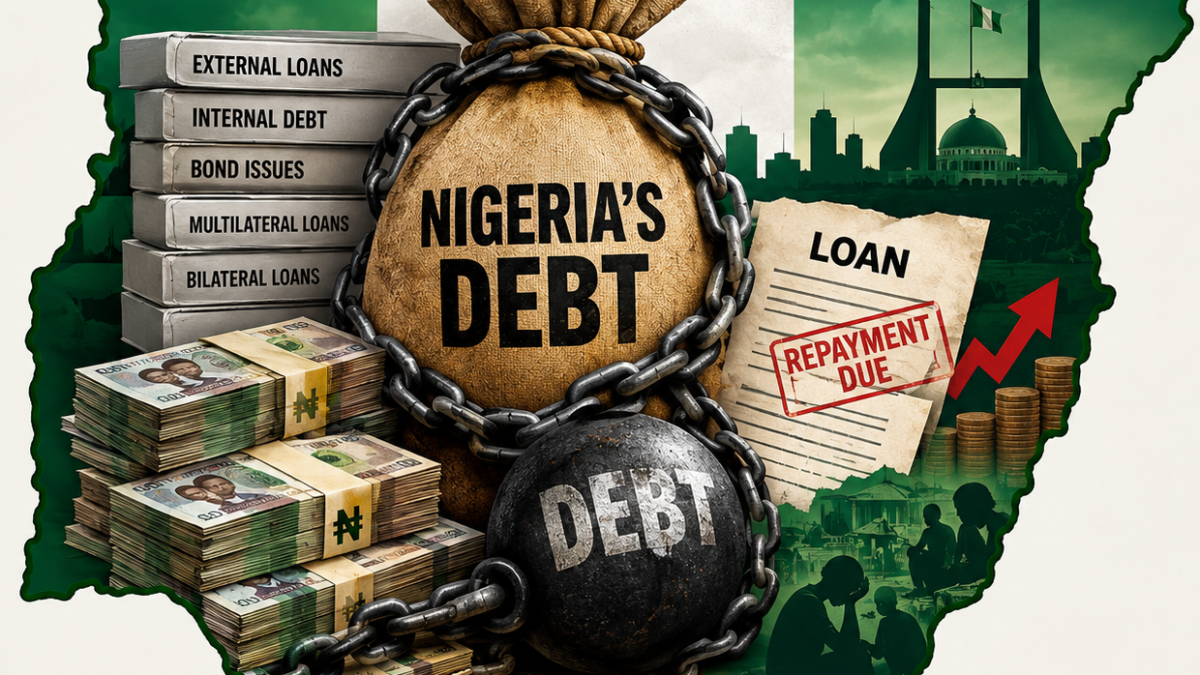
Nigeria’s public debt stock was estimated at approximately ₦177 trillion in 2025, representing 40 per cent of GDP, compared with ₦67 trillion in 2021.
The World Bank attributed the increase partly to exchange-rate valuation effects and the recognition of previously accumulated liabilities. It also observed that domestic debt accounted for 57.9 per cent of Nigeria’s debt stock but generated 72.6 per cent of interest payments in 2025.
The institution urged the Federal Government to strengthen revenue collection, reduce reliance on expensive borrowing, prioritise concessional financing and improve budget implementation to ease mounting fiscal pressures.
It warned that rising debt interest and personnel costs could continue to limit funding for infrastructure and essential public services, particularly if capital spending increases later in the year.