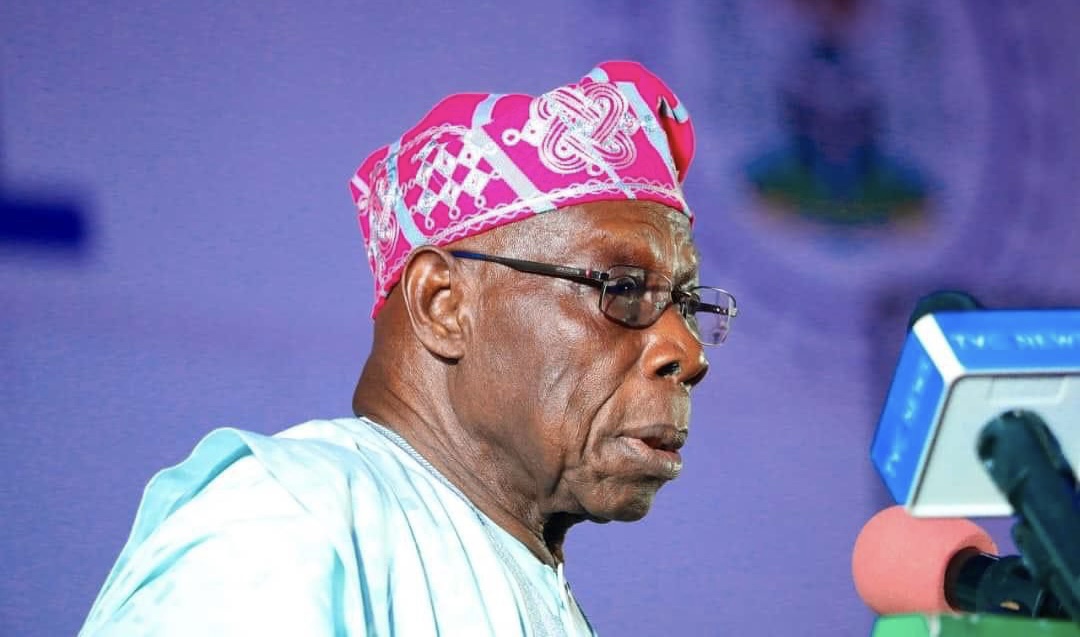
Former President Olusegun Obasanjo has backed calls for an increase in the 13 per cent derivation allocation to oil-producing states, saying the current arrangement should serve as a starting point for further negotiations.
Obasanjo spoke on Monday at the flag-off of the Crude Distillation Unit of the $1 billion Azikel Refinery in Obunagha, Yenagoa Local Government Area of Bayelsa State.
Addressing Bayelsa State Governor Douye Diri, the former president agreed that oil-producing states and communities had yet to receive a fair share of the benefits derived from their natural resources.
“You are right that the states and oil-producing communities have not got a fair deal so far. Thirteen per cent is the beginning. You can continue to talk,” Obasanjo said.
His remarks followed renewed calls by Diri for a review of the derivation formula. The governor argued that communities in the Niger Delta continue to bear the environmental and social costs of oil exploration without receiving commensurate benefits.
Diri also criticised the Land Use Act, arguing that the existing framework limits the influence of states and host communities over resources extracted from their territories.
He maintained that the Niger Delta was not seeking to take all the proceeds from its natural resources but wanted a greater role in determining how they are managed and distributed.
The event also highlighted efforts to expand local participation in Nigeria’s petroleum industry through domestic refining.
Obasanjo challenged Azikel Group President, Azibapu Eruani, to complete the refinery within 12 months, expressing hope that the facility would become operational before his 90th birthday in March 2027.
The $1 billion project is designed to process 25,000 barrels of crude oil daily and is expected to produce petrol, diesel and other petroleum products.
Obasanjo commended Eruani for sustaining the project and acknowledged the financial support provided by the African Finance Corporation and the African Export-Import Bank.
Meanwhile, Diri urged young people in Bayelsa to acquire relevant technical and vocational skills to take advantage of employment opportunities expected from the refinery. He also called on oil companies operating in the Gbarain-Obunagha area to rehabilitate the road leading to the facility.
The discussions have renewed attention on resource distribution, environmental concerns and the need for oil-producing communities to benefit more directly from Nigeria’s petroleum wealth.