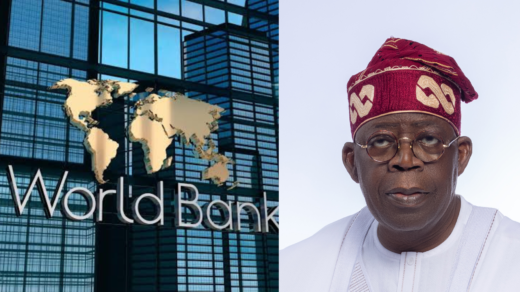
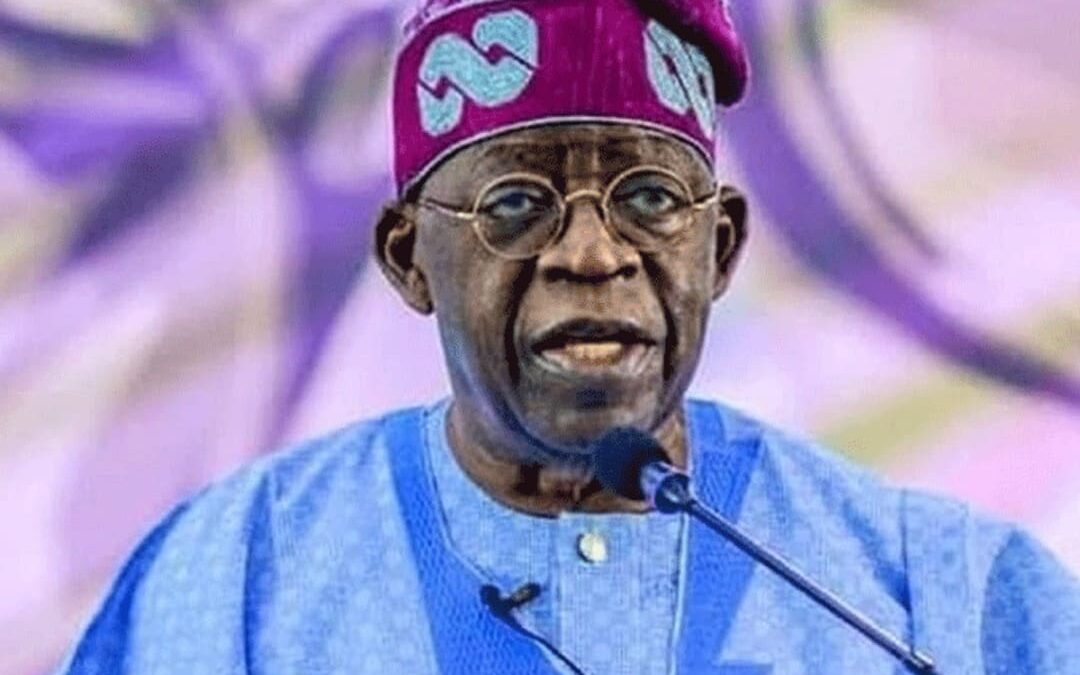
President Bola Tinubu has defended his administration’s economic reforms, citing improved economic growth, increased government revenue and rising foreign reserves following the World Bank’s latest assessment of Nigeria’s economy.
In a statement issued on Sunday through his Adviser on Information and Strategy, Bayo Onanuga, the President said the World Bank’s October 2026 Nigeria Development Update showed that the difficult decisions taken since 2023 were beginning to produce results.
According to the report, Nigeria’s economy grew by 4.2 per cent in the first half of 2026, compared with 3.9 per cent during the corresponding period in 2025.
The World Bank attributed the improvement to continued economic activity, particularly in the services sector, alongside a stronger contribution from agriculture.
Tinubu said the removal of petrol subsidies, unification of the foreign exchange market and measures to strengthen fiscal discipline had helped improve government revenues and stabilise the economy.
He added that the reforms had created additional resources for federal, state and local governments to invest in infrastructure and public services.
The World Bank report also showed that federation revenues increased by 69 per cent in real terms between 2023 and 2025, with state governments emerging as the largest beneficiaries.
The additional revenue enabled state governments to increase capital expenditure by 151 per cent in real terms over the same period, with investments directed towards roads, transportation, agriculture, energy and housing.
Nigeria’s external financial position also improved, as the country’s current account surplus rose to $12 billion in the first half of 2026, up from $8.6 billion in the corresponding period of 2025.
Foreign reserves increased from $45.5 billion at the end of 2025 to $53.8 billion at the end of August 2026.
Despite the improvements, the World Bank noted that inflation and household purchasing power remain significant concerns. Higher global fuel prices linked to the Middle East conflict have also slowed the decline in inflation.
The bank projected that Nigeria’s economy could grow by an average of 4.4 per cent between 2026 and 2028, while inflation could gradually fall to about 12 per cent by 2028, provided economic reforms continue.
Tinubu acknowledged that more work was needed to ensure economic improvements translated into better living conditions, lower food prices and increased employment opportunities.
He also urged state governments to manage their increased revenues responsibly and prioritise projects that improve healthcare, education and the welfare of citizens.
The President reaffirmed his administration’s commitment to continuing its economic reform programme under the Renewed Hope Agenda.