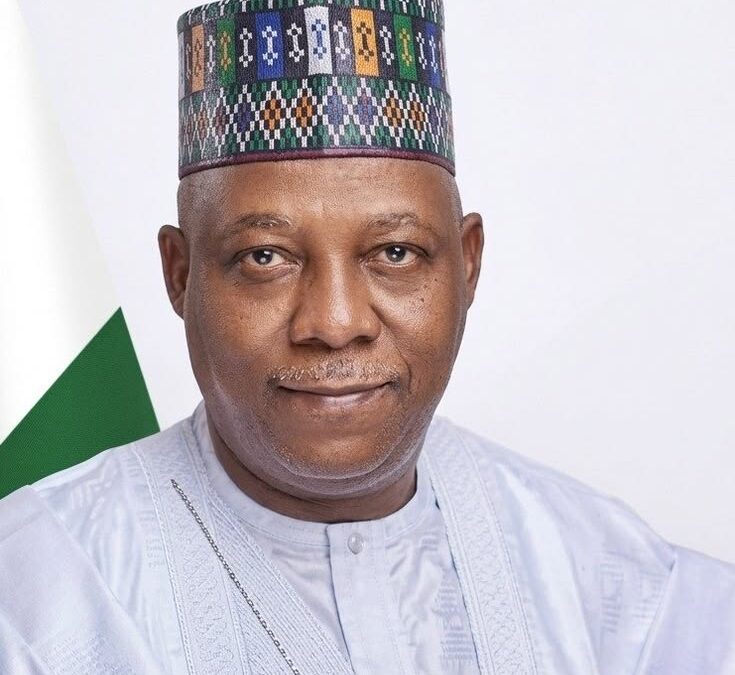
Vice President Kashim Shettima has urged African countries to move away from exporting raw mineral resources and instead develop the processing and manufacturing capacity needed to retain more economic value within the continent.
Shettima made the call while representing President Bola Tinubu at the Third Africa Minerals Strategy Group High-Level Roundtable in New York.
The Vice President argued that Africa’s abundant mineral deposits should translate into tangible economic benefits for the communities and countries where the resources are found.
He called for stronger cooperation among African nations, warning against a situation where countries compete with one another for mining investments by offering lower royalties, weaker local-content requirements and extensive concessions to investors.
Rather than pursuing fragmented approaches, Shettima advocated the development of integrated regional markets, processing centres and cross-border mineral corridors that could strengthen Africa’s position in global mineral supply chains.
He highlighted reforms being undertaken in Nigeria’s mining sector, including efforts to improve geological data, encourage local processing, formalise artisanal mining and tackle illegal mining activities.
Shettima also cited rising mining revenues and investments in lithium processing in Nasarawa State as examples of the economic opportunities that could emerge when mineral resources are processed locally instead of being exported in their raw form.
The Vice President expressed support for the Africa Minerals Strategy Group’s Mutual Assured Development framework, which calls for governments to provide predictable policies and credible institutions while investors contribute capital, technology and local economic value.
He further urged African governments to move beyond signing agreements and declarations by establishing clear implementation timelines, financing arrangements and accountability mechanisms.
According to Shettima, the success of Africa’s mineral development strategy should ultimately be reflected in infrastructure, industrial facilities, skilled employment, stronger African-owned businesses and improved living conditions in mining communities.
He stressed that the mere presence of mineral deposits should not be equated with prosperity if the economic benefits do not reach local populations.
Meanwhile, Minister of Solid Minerals Development and Chairman of the Africa Minerals Strategy Group, Dele Alake, proposed the creation of an African Artisanal Mining Formalisation and Safety Facility.
Alake said the proposed mechanism could assist African countries in formalising artisanal mining operations while improving miners’ access to safer equipment, geological information, occupational safety training and environmental rehabilitation.
He also pointed to recent mining-related deaths in parts of Africa as evidence of the need for stronger safety systems within the artisanal mining sector.
The roundtable brought together African ministers, development finance institutions, multilateral organisations and representatives of mining, technology and mineral-processing companies.
A representative of the United States Government, Chris Kulukundis, also expressed Washington’s willingness to work with African countries to develop the continent’s mineral resources.
A major outcome of the meeting was the signing of the Continental Integration and Economic Assurance Declaration, aimed at creating a framework for greater African cooperation on critical minerals, value addition and policy coordination.
The discussions form part of wider efforts by African governments to increase local participation in the global critical-minerals industry and capture more value from the continent’s extensive natural-resource base.