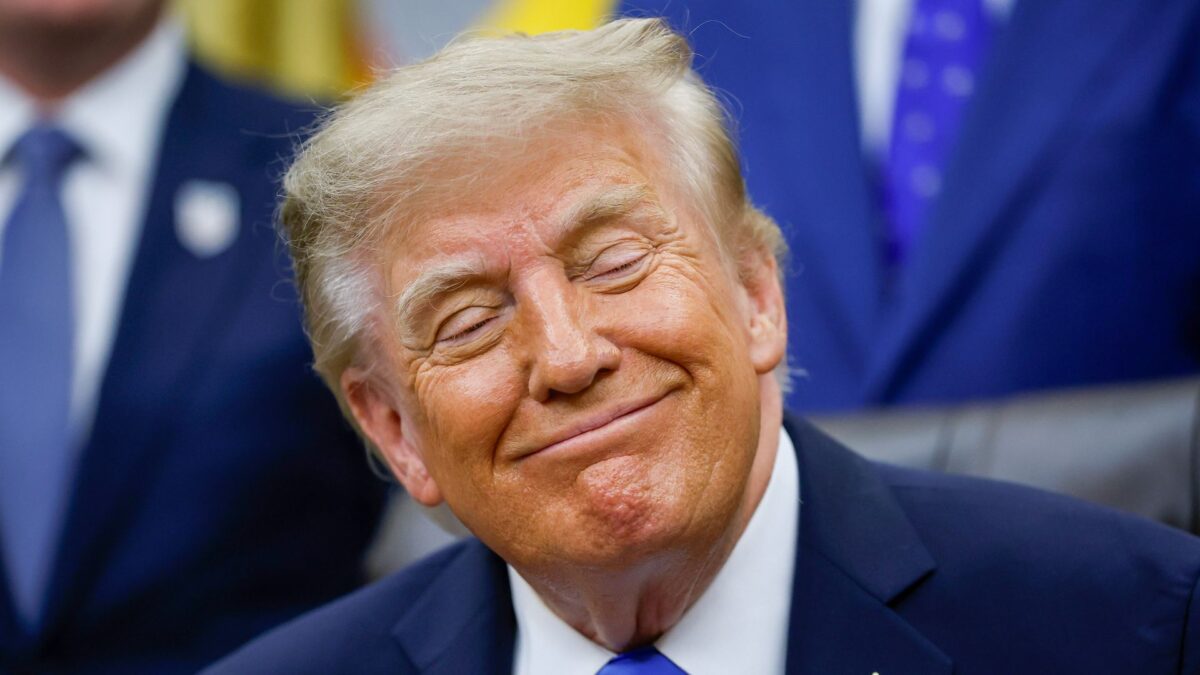
US President Donald Trump has promised to give every adult American citizen $5,000 if Republicans retain control of Congress in the upcoming November midterm elections.
Trump made the pledge during the Republican Party’s midterm convention in Dallas, Texas, where he urged voters to support Republican candidates in the elections.
Under the proposal, Americans would receive what Trump described as a “dividend” if Republicans maintain control of both the House of Representatives and the Senate.
Trump said the proposed payment would be made because of what he described as the country’s strong economic performance under his administration.
He added one condition, saying the money would have to be spent within the United States.
However, the president did not provide details on how the proposed payments would be funded, when they would be distributed or what mechanism would be used to deliver the money to eligible Americans.
The proposal could carry a massive financial cost. Reuters reported that providing $5,000 to roughly 270 million American adults could cost about $1.35 trillion.
The announcement has also raised questions about whether the president can implement such a payment without approval from Congress. The proposal would require significant legislative and financial arrangements before any payments could be made.
Vice President JD Vance later suggested that the proposed payment could exclude wealthier Americans and indicated that tariff revenue could potentially be used to finance it. However, no final eligibility criteria or funding plan has been announced.
The promise comes ahead of the November 3 midterm elections, in which Republicans are seeking to retain control of both chambers of Congress.
Trump has increasingly placed himself at the centre of the Republican campaign, urging voters to treat the midterm elections as a judgment on his administration.
The proposed $5,000 payment is expected to become a major talking point as both parties campaign for control of Congress.
For now, however, the plan remains a proposal, with questions over its funding, legality and implementation still unresolved.