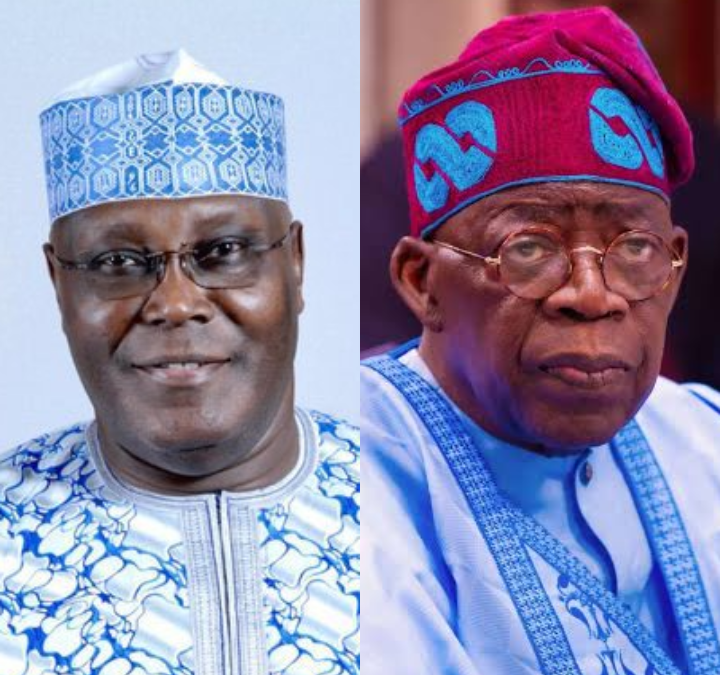
The Federal High Court in Abuja has adjourned until September 28 further proceedings in a lawsuit filed by former Vice President and African Democratic Congress (ADC) presidential candidate Atiku Abubakar, seeking to prevent President Bola Ahmed Tinubu from contesting the 2027 presidential election.
The case, identified as FHC/ABJ/CS/1888/2026, centres on allegations that Tinubu submitted a disputed National Youth Service Corps (NYSC) discharge certificate to the Independent National Electoral Commission (INEC).
Atiku filed the suit alongside the ADC, which is listed as the second plaintiff. Tinubu, the All Progressives Congress (APC), and INEC are named as the first, second, and third defendants respectively.
In an affidavit filed in support of the case, Atiku alleged that the certificate submitted by Tinubu contained the name “Tinubu Bola Adekunle”, rather than the president’s actual name.
According to the former vice president, the document, which he attached to the court filing as an exhibit, allegedly belongs to another individual and was presented to INEC as an authentic certificate.
Atiku further claimed that the disputed certificate had been associated with Tinubu since his 1999 campaign for governor of Lagos State.
The plaintiffs are asking the court to determine whether the alleged submission of a forged certificate amounts to a constitutional ground for disqualification under Section 137(1)(j) of the 1999 Constitution, as amended.
They are also asking the court to rule on whether Tinubu and the APC should be barred from participating in the 2027 presidential election on account of the alleged certificate submission.
Among the reliefs being sought is a declaration that Tinubu violated the Constitution by allegedly presenting a forged certificate to INEC during his 1999 Lagos governorship bid. The plaintiffs are also seeking an order preventing Tinubu and the APC from participating in the 2027 presidential election.
Service of Court Documents Becomes Early Point of Dispute
At Tuesday’s proceedings, lawyers representing Tinubu appeared before Justice Inyang Ekwo. However, Atiku’s legal team told the court that the president had not yet been personally served with the originating processes.
Tinubu’s lawyers, led by Omosanya Popoola, informed the court that they had been authorised to represent the president.
Atiku’s counsel, Joseph Onu, nevertheless maintained that given the importance and sensitivity of the matter, his client wanted the court documents either personally served on Tinubu or served through a court-approved substituted method.
Onu said the plaintiffs would accept service through Tinubu’s lawyers if there was a written undertaking from the president authorising his legal team to receive the documents on his behalf.
INEC’s counsel, Alex Iziyon, SAN, argued that the presence of Tinubu’s lawyers was sufficient to establish an undertaking for the purpose of service.
INEC also urged the court to accelerate proceedings, noting that more than 17 days had elapsed since the case was instituted. The electoral commission said it was prepared to file its response within 10 days.
After hearing the arguments, Justice Ekwo said the court could not dictate to the plaintiffs how they should conduct their case.
The judge subsequently adjourned the matter until September 28 for mention.
Judge Warns Parties Against Media Trial
Justice Ekwo also issued a strong warning to lawyers involved in the case against discussing the substance of the proceedings in the media.
The judge said the dispute must be determined within the courtroom rather than through traditional or social media.
He warned that counsel could be held responsible if their parties discussed the pending proceedings publicly and said the court would take serious action where necessary.
The case is expected to attract significant public attention as the 2027 presidential election approaches, with the court now set to consider the parties’ positions on the constitutional and electoral questions raised by the plaintiffs.